What You Need to Know When Applying for SSI Benefits
Oct 02, 2023
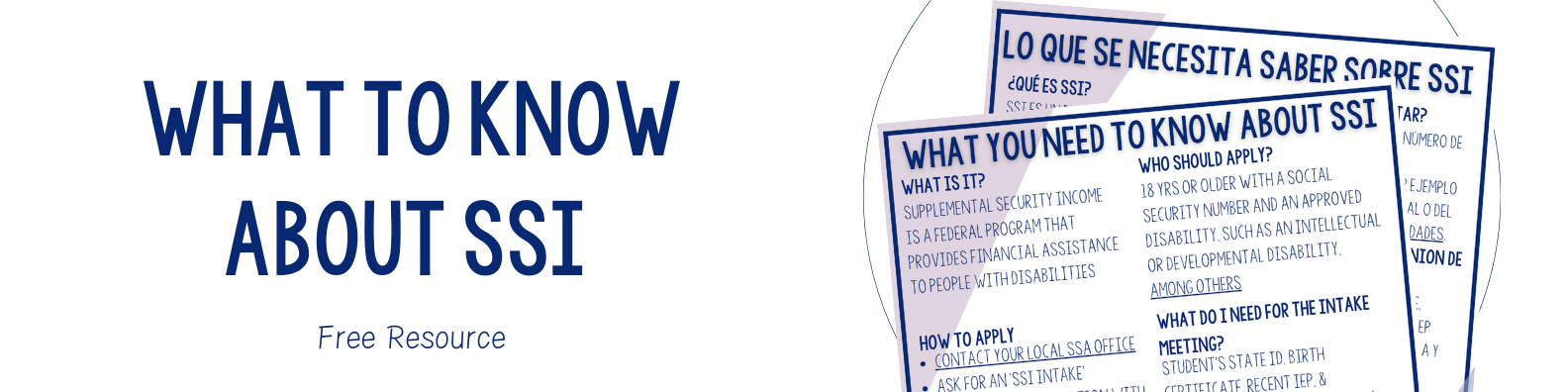
What is SSI? Supplemental Security Income, or SSI for short, is a monthly payment issued to an individual with a disability to help cover the cost of living expenses. SSI funds, also known as Social Security Disability Benefits, are a financial support to cover the costs of respite, related services, transportation, care providers, rent, food, medical expenses, and more in their daily life.
While families may prefer to cover these types of costs as they have the majority of the individual’s life, there may come a time when that stream of income changes or is no longer available. Life happens and securing a funding source, such as SSI, is an opportunity for the individual to receive funds dedicated specifically to them.
Since SSI is sometimes a gateway to other benefits, consider SSI to be near the top of the ‘benefits to do’ list. For example, once an individual is approved for SSI they are automatically eligible for Medicaid. Some states automatically enroll the individual once they are SSI approved, others states (like Illinois) have the individual enroll for Medicaid separately. Some states also have their own form of SSI financial assistance (Supplementary Payment) that is paid to the individual after they are approved at the federal level for SSI (like California).
As of 2026, the maximum SSI monthly payment is $994 for an individual SSI recipient. An individual may receive a partial SSI payments, depending on their needs and living arrangements. Outlining their needs and living arrangements is part of the application process, which is used to determine if the individual qualifies for the maximum or partial monthly payments.
To be clear, the SSI monies used to pay the monthly benefit are earmarked in the federal budget completely separately from Social Security (what is taken out of our paychecks). If this is a deterrent or point of confusion, you can find more information here (see the 2nd bullet point under the heading ‘HOW IS SSI DIFFERENT FROM SOCIAL SECURITY BENEFITS?’).
What You Need to Know When Applying for SSI:
Parents’ Income is NOT Considered After the Individual Turns 18 Yrs Old
An individual may choose to apply for SSI benefits as they become a young adult and hitting the age of majority (18 years old) means that income from family members, like parents' income, is no longer taken into consideration during the application process. What will be taken into consideration is if the individual lives with family who are covering certain expenses, but those are questions that would impact the monthly amount and not whether the individual would be eligible for the monthly benefits.
An Individual’s Disability is Part of the SSI Eligibility
Simply having a diagnosed disability or having received special education services from an Individualized Education Program (IEP) while in high school will NOT automatically make an individual approved for SSI. The individual will need to meet the Social Security Administration's eligibility criteria in order to be approved for SSI program benefits. The Social Security Administration (SSA) takes into account a few different factors when making a determination and the type of disability is one of them. You can read through the long list of approved disabilities and specific criteria for a qualifying disability in the POMS (Program Operations Manual System) HERE (sometimes referred to as the Blue Book). There are 12 categories for the Listing of Impairments Adults, including category 11. Mental Disorders, which include Intellectual Disabilities, Autism spectrum disorder, and some mental illnesses like OCD, bipolar disorder, and anxiety disorders. Factors such as recent IQ scores, medical records, school records, test results, disability, potential for recovery, and capacity to obtain and maintain work are part of the decision, including previous work history.
The Infamous $2,000 Asset Limit
At the time of this blog post there are currently several different bills trying to be passed to change these incredibly outdated financial standards. However, if you are planning to apply before the laws have changed, understand that if the individual has more than $2,000 to their name (think savings account, checking account, home, property, etc), then they will automatically be denied. Why? Simple answer- they have too much money. The federal government has asset limits of $2,000 for this benefit because it sees $2,000 as enough to live off of (I know, right! Again, the system is running on very outdated living standards markers) and assumes the individual will apply again when they have more financial need. So, even if your loved one has no income, limited income, or low income, if they have SOME money to their name, it needs to be less than $2,000 or safe in an ABLE Account or Special Needs Trust. You can read more about ABLE Accounts and Special Needs Trusts on my free Take Advantage IL posts.
Interested in sharing your voice on the SSI legislation? Check out the ARC’s website and advocate here.
If the individual has more than $2,000 to their name and it is safely in a Special Needs Trust or ABLE Account, then they need not worry. Those are SSI- approved safe zones! Remember, if your state does not offer an ABLE account, you can open an account in another state. Find out more here!
There is Free SSI Application Assistance
If the thought of completing the application for SSI seems overwhelming, your feelings are valid. The online application, jargon-y terms, and the if-I-answer-this-wrong-will-this-lead-to-denial type questions can feel daunting. Good news, there is FREE help you can access!
Your local Social Security Administration Office has trained staff who can assist you in understanding and completing the SSI applications. They are trained to serve as informational assistants and are not providing support with the intent on getting the individual approved or denied, rather to understand the application and how to complete it.
Simply call your local office and ask for an SSI Intake Meeting. The operator will likely connect you with someone who will set an appointment for you to come in to complete the application in-person. They will share what information you should bring with you (think current/past IEP’s, doctors records and testing, IQ test scores, etc). Anticipate the application process to take a couple hours.
If you are feeling confident, you can apply online for free. You can find the local Social Security office by entering in your zip code here or call 1-800-772-1213.
Typically a 3-6 Month Process
If an individual is looking for immediate funding, SSI is not an overnight answer. The typical process from submitting the application to receiving an approval or denial letter is, on average, 3-6 months. Why does it take 3-6 months? SSI is a need-based program, so the SSI agents of this federal program need time to review all the documentation that was submitted (and yes, they will review it all) to determine if there is both a 'need' and an 'eligibility.'
Sadly, there is an extremely high rate of denial for first time applicants (roughly 65%+). Find the website listed on your denial letter and begin the appeals process online within 30 days of receiving the letter. An individual can be denied for a wide variety of reasons, so appealing can help keep the application in motion.
It may be helpful to appeal instead of completing a new application because if the individual is later found to be eligible, they MAY receive back pay all the way to their original application date ($$$).
If the process is taking longer than you’d like, contact your local SSA office and ask for a status update. You’ll need to verify you are the applicant and they should be able to share some insight.
SSI is Different from SSDI Benefits
SSI is not the same as SSDI, or Social Security Disability Insurance benefits. They are related, but not the same. For example, SSDI is NOT health insurance, but rather another form of monthly cash payments that can be used to pay for all sorts of individual needs. Also, SSDI recipients and SSI recipients have to meet the same eligibility criteria. Check out this post to read more about SSDI cash benefits and SSDI application process.
My hope is this information equips you with answers and confidence as you begin to understand the world of benefits and how they can support meeting the basic needs of individuals with disabilities. If you have questions, feel free to reach out to me directly at [email protected] (and then check your Spam if you don’t see my reply email within a couple days) or contact your local Social Security Administration office directly.
*This information is current as of the blog posting date of October 2023 and was updated in January 2026. The author, Heather, is not a lawyer; she is not affiliated with the Social Security Administration, nor is she providing legal advice. She is only sharing her experience in working with families to understand and apply for funding.