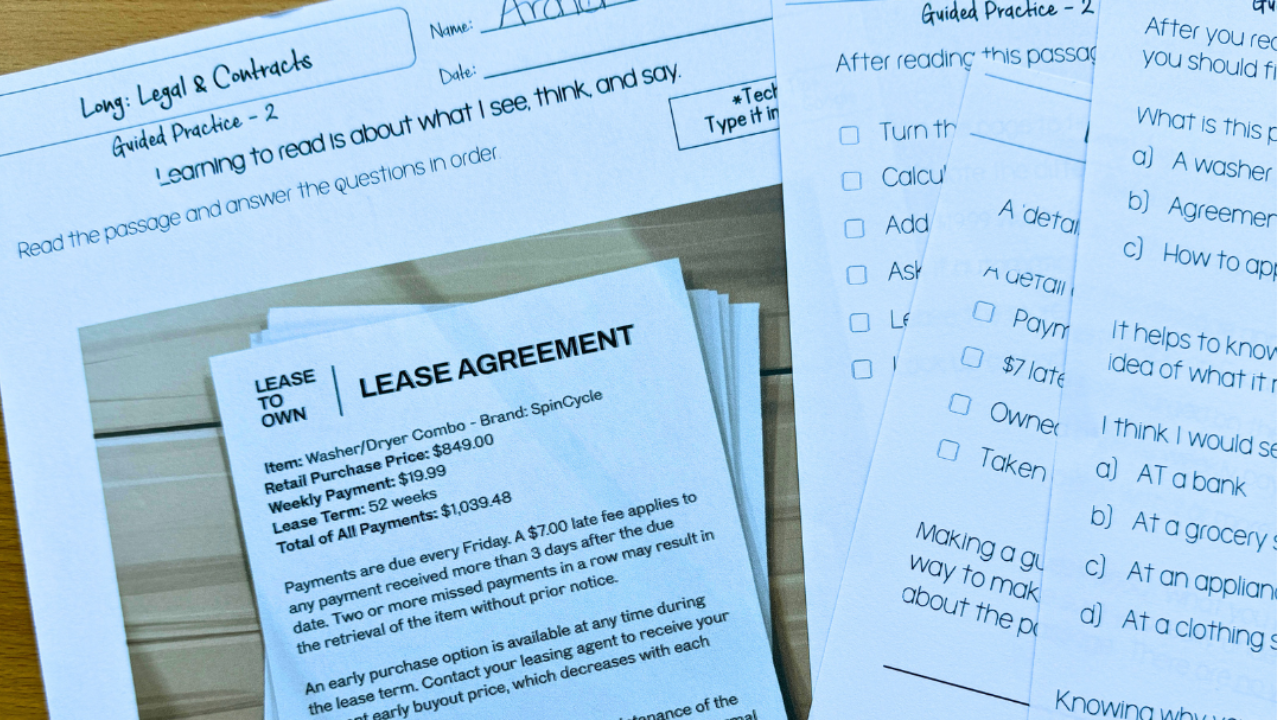
Transition Curriculum for Students in Special Education
Aug 25, 2026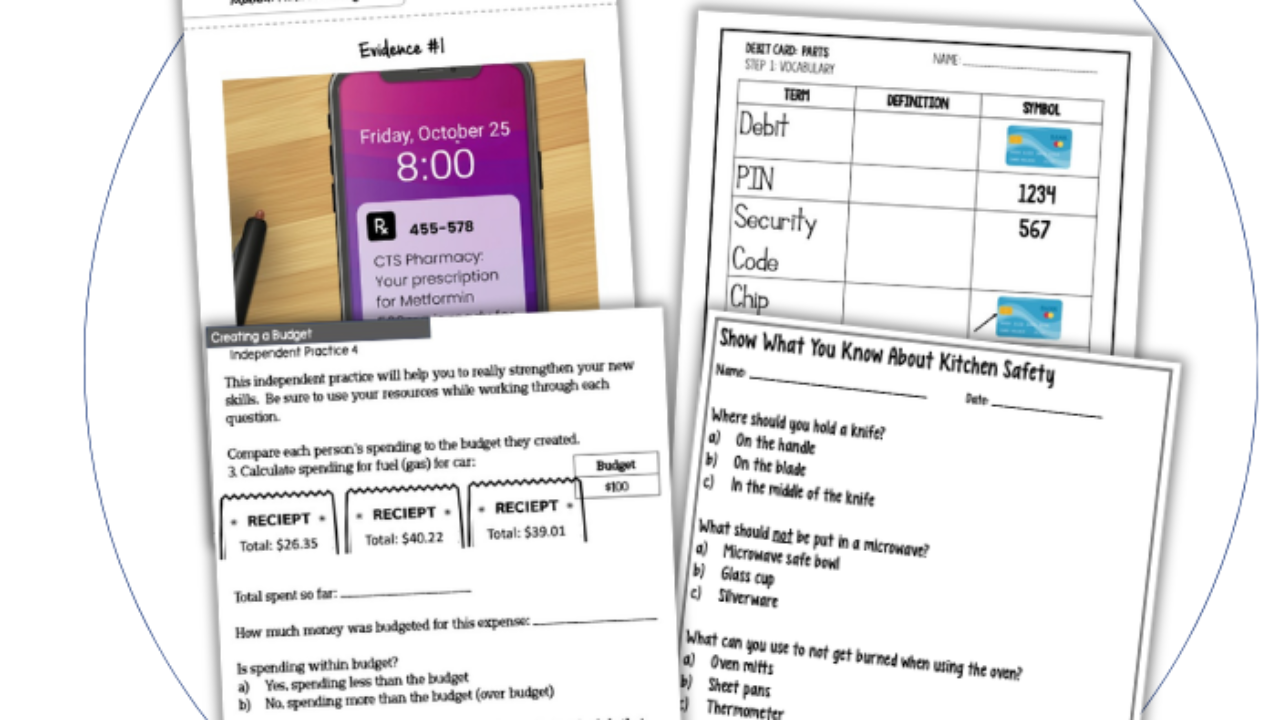
I called myself a 'Special Education teacher' to those who were unfamiliar with special education.
I called myself a 'Special Education teacher for post-high-school-aged students' for those who were sort of familiar with special education.
I called myself a 'Transition teacher' to those familiar with an Individualized Education Program, as they understood that special education services would be provided until (or sometimes through) age 22 (or older, i.e., Michigan).
Since I'm in email communication with teachers from all over the USA and beyond, I like to look at their email signatures, as it is very rare for me to see a teacher use 'Special Education Teacher' as their identifier.
For the sake of clarity, let me say...
If you teach students with disabilities who are 14 years or older, I would consider you a transition teacher.
Regardless of their chosen title (and they do run the gamut), if your students are old enough to have an IEP Transition Plan, then you are teaching transition-age students.
And, if you are teaching transition-aged students, then you have probably searched 'transition curriculum' at some point in your career (like, maybe a few weeks before the start of a new school year).
But, let's back up for a moment. If you are new to teaching transition-age students (14 years or older), welcome to this wonderful little niche of special education.
I would tell you this is where the focus narrows to supporting high school students with an individualized education plan in a smooth and successful shift from school life to real life. Students get to share their dreams, goals, and desires, and the IEP team is there to support the young adult in learning the skills, finding opportunities to explore, and sharing connections they may want or need after graduation. As students enter the transition IEP phase, their IEP goals can now address both academic skills and transition goals, meaning they check the box for both addressing the student's specific disability and the skills they will need to pursue their long-term goals.
All of this means that special education teachers are supporting the academic AND functional/transition needs of each student, and it can feel like a mountain of expectations. This is why a transition curriculum can help teachers to feel less overwhelmed.
Many of those components, like coordinating students to meet with a transition specialist, are often addressed in the margins of special education teachers' day-to-day teaching. Between the start and end of the school day is where learning skills to address the pillars of student's transition plan takes place.
How a Transition Curriculum Contributes to a Successful Transition
For special education teachers who are supporting students in the transition process, it's helpful to know how a transition curriculum can support a successful transition. A transition curriculum can help to check a variety of boxes, all of which address both the student's goals AND their desires, as identified through the transition assessments.
However, when it comes to transition curriculum, it can be less straightforward than, say, an algebra curriculum. Since the transition season of a student's IEP is determined by their age and IEP meetings determine the level of need, focus, and goals for the student for the next 364 days, it can seem impossible that any curriculum will perfectly address the needs of that student. And then, when those needs are completely different for each student in class, it may feel as if it would be impossible to find a curriculum that would be both applicable and meaningful.
However, there are FOUR aspects that a special education transition curriculum should contain to be applicable and meaningful to special education students (no matter what's identified in their transition plan). If you are a teacher or key curriculum decision-maker within a school district, then keep reading...
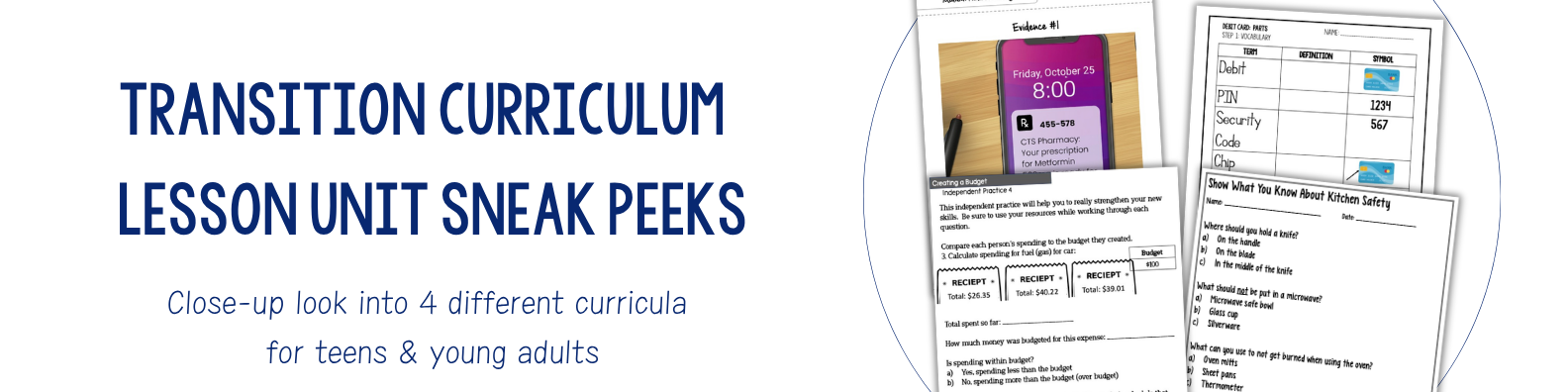
Transition Curriculum Lesson Sneak Peek
Components of a Strong Transition Curriculum
If a special education transition curriculum covers the 4 'must haves' (which I've outlined ↓), then both teachers AND students will have materials that meet their needs and their real-world functional and/or academic goals.
1. Age-Appropriate Images, Font, & Colors
If you are teaching young adults, then the materials used in your classroom should be respectful of their age. It IS possible for materials to both reflect their chronological age AND meet them at their skill level. For example, your 18 year old students can see pictures of young adults on their worksheet and be able to complete the task because the vocabulary is at their reading level and the worksheet is free of visual fluff (no wavy borders).
Age-appropriate materials aren't just about adapting the colors and pictures of a curriculum that was designed for elementary-age students to meet the needs of their young adult students. It's about the CONTENT. The examples that are written to build skills for elementary-age students are vastly different than those that young adults are experiencing.
Here are a few examples:
Time Management Scenarios
Elementary-Age Students: Do we have enough time to play this game if recess is ending soon?
Transition-Age Students: Do you have enough time to wash and dry your uniform before you need to catch the bus to work?
Budgeting Scenarios
Elementary-Age Students: Do you have enough cash to buy this figurine?
Transition-Age Students: How much have you spent each month for the past 3 months on your cell phone bill? How much should you budget for next month, and when is it due? Which paycheck will cover that bill?
Do you see the difference? Images, font, and colors are important, but adapting curriculum that wasn't made for transition-age students can be more work than it's worth.
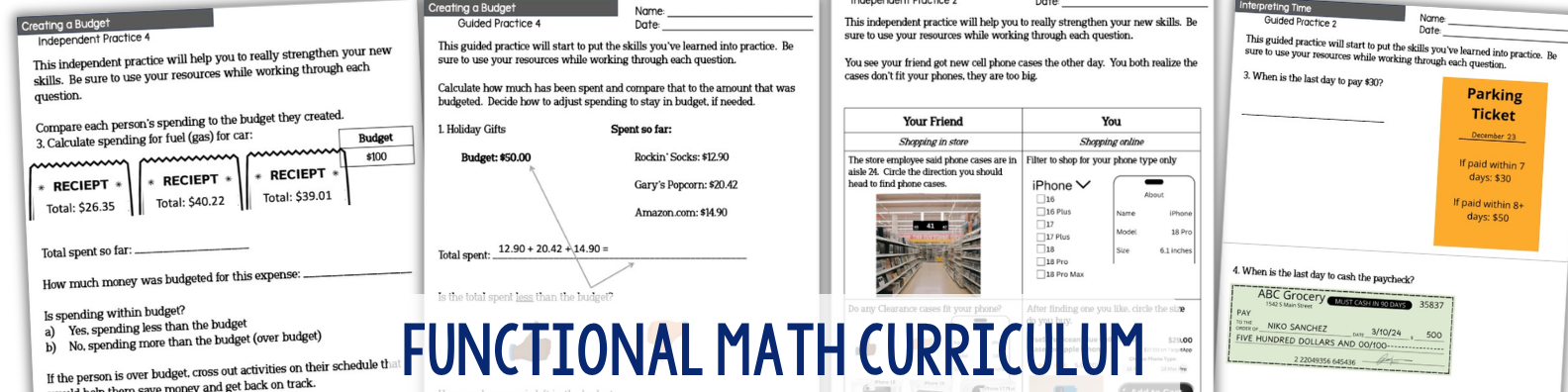
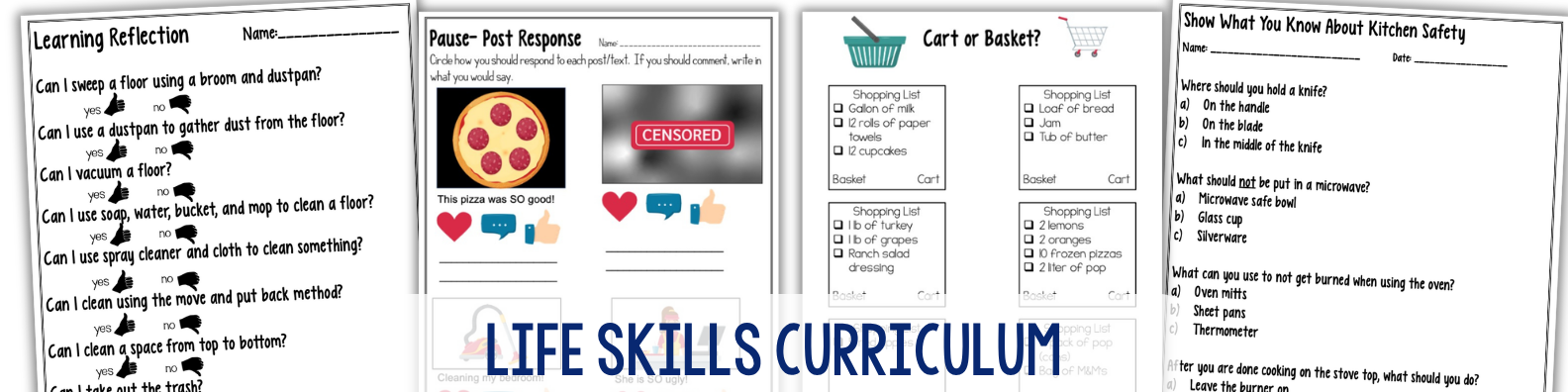
Age-appropriate curriculum includes content and design specifically for young adults, and it does exist!
Here is an example:
2. Covers Independent Living, Vocational Training, Education, and Employment
A major component of the curriculum is that it MUST address all areas of adult life, specifically postsecondary education, training, employment, and independent living.
Independent living may include the young adult contributing to their family home by taking care of personal matters. It may include functional skills, like helping clean the kitchen that is shared with a roommate. Transition curriculum should consider and support the living desires of young people, especially as their desires to live with family immediately after school ends may morph into wanting to live with friends in the community within a few years.
Postsecondary education outlines whether the student wants to pursue further education after earning their high school diploma. Materials in a curriculum that addresses post-secondary education may include time management, problem solving, or self-advocacy lessons, as those are all skills needed when students pursue additional education.
Training & Employment would be addressed through vocational education materials. Whether your students want to pursue a volunteer placement or competitive paid employment, they will need job skills. Beyond just career development and exploration, how to complete a job application, read a paycheck, and abide by the cell phone policy, students need soft skills like how, when, and who to ask for help at the job site, how to gracefully accept feedback from supervisors (and well meaning coworkers), how and when to ask for reasonable work accommodations and assistive technology support, and what it looks like to 'hurry up' when a task needs to be finished and a shift is coming to an end.
*While I have a variety of vocational skills resources, a new Vocational Skills Curriculum is currently in development! If you are interested, be sure to join my newsletter for updates!
3. Full School Year in Length
If you have 180 or more days of school in a year, then a curriculum needs to last that many days! Between the first and last few days of school, half days, testing, and (insert all the other unique schedules specific to your school), you likely have around 170 days of regularly scheduled days in the classroom. If a curriculum does not include at least 170 days, then teachers would need to supplement (read: find or create their own materials, which again, takes time) to cover the needs of their classroom.
A curriculum is also NOT just a group of worksheets or activities; it's an intentionally designed set of units that include detailed step-by-step lesson plans, slide decks for introducing the concepts, individual and group activities to review the concepts, assessments, answer keys, and more.
The curriculum should also have flexible materials and instructional sequences, because no school year looks the same. Curriculum materials should fit into the TEACHER'S schedule, not the other way around.
In addition to being flexible, a curriculum materials should be consistent to help both teachers and students build a routine, but just enough variety to keep students from getting bored (and mentally checking out). Teachers do not have time to address behavior from a curriculum that is boring, nor do they have time to constantly be searching for, adapting, or creating materials from a curriculum that is not intended to cover a full school year.
4. Reflects Real-World Experiences
A transition curriculum should be built based on evidence-based practices, but it should ALSO include materials that mimic real-life situations!
Looping back around to how transition curriculum can support a successful transition to post-school life, the materials within a transition curriculum should mimic the real world. Addressed in #1 of this list, if a curriculum includes age-appropriate content, then students will see themselves in the curriculum. And, when students see examples on a worksheet that have actually happened in their real personal lives, then they become even more driven to understand (i.e. get the right answer). And, when students' needs are addressed through real-world examples, then students are engaged, and meaningful skill development follows.
What are real-world experiences of teen and young adult students? Let's review...
Not real-world: Reading a novel that was written and distributed by an educational curriculum company.
Real-world: Reading an email about the 7-day free trial ending and the automatic monthly charge to their debit card.
Not real-world: Reading a passage about Johnny Appleseed with a cutesy cartoon apple border.
Real-world: Reviewing a college course syllabus and next week's work schedule at an active orchard to determine conflicts.
To support a smooth transition from school life to the real world, a transition curriculum should include real world experiences of today's modern student.
Functional Reading Comprehension Curriculum
Speaking of a smooth transition...
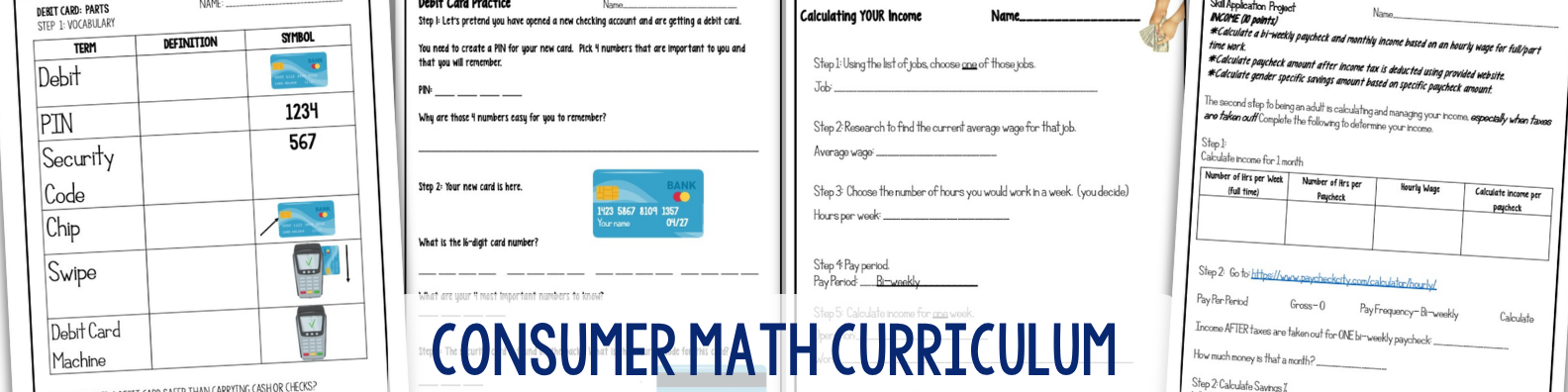
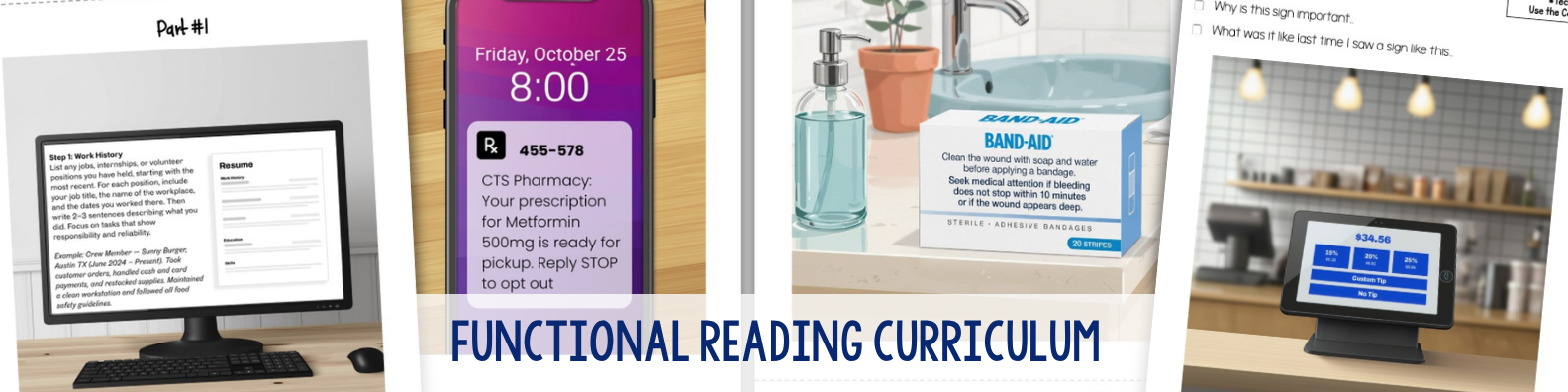
Now that you know what a transition curriculum should include and cover, if your school district is looking to add to the transition program's current curriculum, update, or begin to build a library of resources, the Complete Bundle of Curriculum may best meet your needs. Priced as a one-time cost, districts will have access to four full-year curriculums, Functional Reading Comprehension, Functional Math, Life Skills, and Consumer Math. There is no limit on how many educators or students can access the curriculum, making it flexible and usable for years to come.
This Goes Without Saying...
There are two things that canNOT be purchased as part of a transition curriculum:
1. An agency list of community organizations, programming, and benefits/services/supports that would aid the student in their adult life. This would need to be drafted and shared by the case manager or transition specialist because it is specific to each student and their local area.
2. Community-based career exploration experiences. While video, internet research, worksheets, and discussions can teach a lot, organizing work-based learning opportunities for students to be boots on the ground at a job site is not purchasable. Again, a transition specialist, vocational specialist, local pre-employment services rep, or case manager would have to organize.